Sketchbook as Sanctuary @ Chelsea College of Arts, London // reflections + my approach to my practice of running workshops
How do we create conditions for sanctuary, belonging, and attention within systems that are not always designed for us?
This question has been at the heart of much of my research and practice for many years in my work collaborating with institutions, so here i’ll be offering you a bts (including a gallery below) from my latest workshop ‘Sketchbook as Sanctuary’ at UAL Chelsea Collage of Arts last week.
As always, if you have any questions, swirls of reflections of your own, or you simply want to throw your name in the hat to join the online version of this event, get in touch!
It’s nice to be back Home. 👩🏽💻
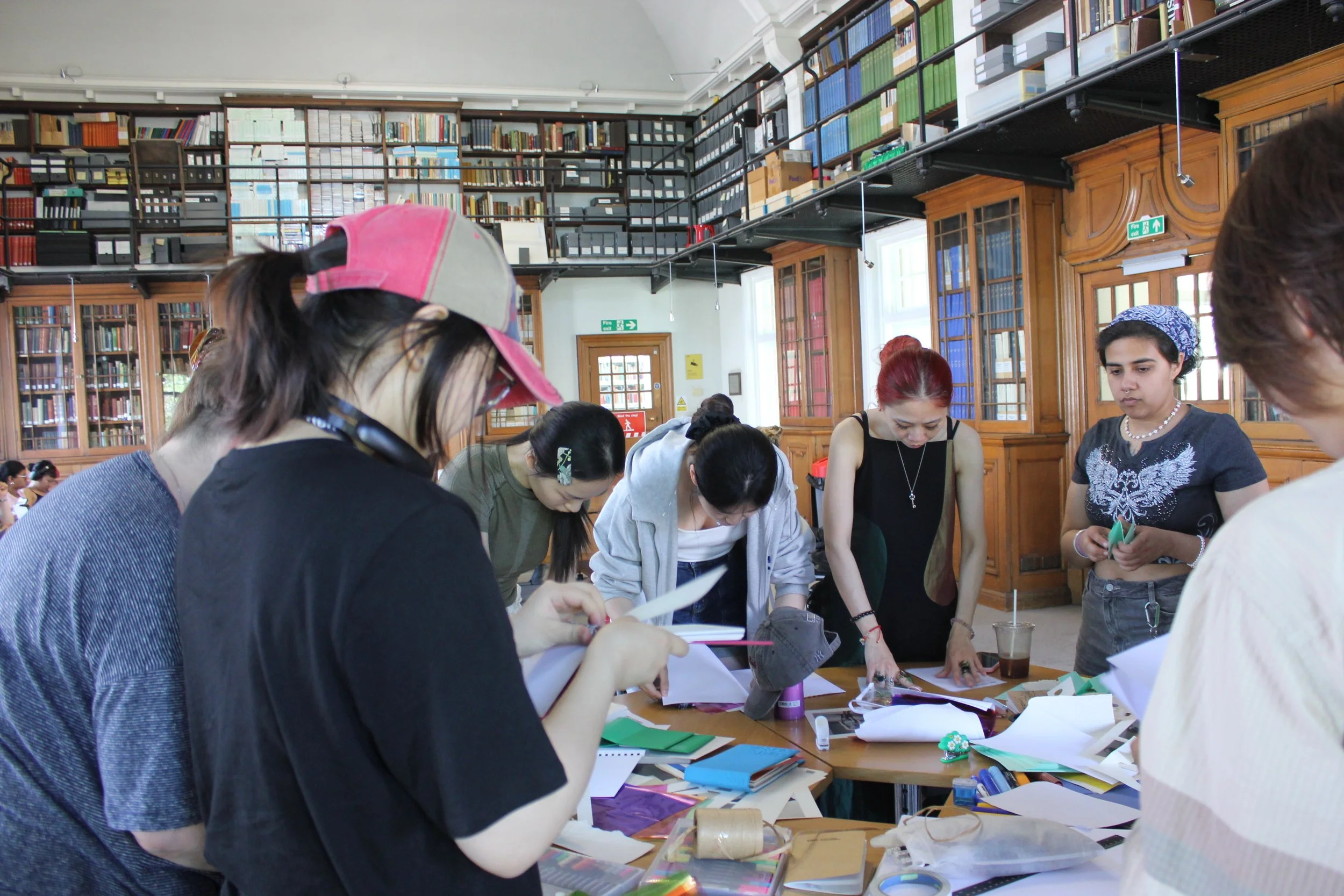
It’s show/deadline season at the University of the Arts, London, so on Wednesday I facilitated my Sketchbook as Sanctuary workshop at Chelsea College of Arts Library in an offering intended to hold space for students to reconnect with creative practice, particularly during periods of overwhelm, transition, or deadline pressure.
Was lovely to be invited by Academic Support to contribute to this day of Sketchbook love with good people. We had gathered earlier May to plan the day, what it might look-feel like, what encounters might occur, and also (very importantly to me as a starting point) working with the space itself.
I’d been involved in planning the workshop festival at Two Temple Place in London, following what i was subsequently told was me being the initiation for the entire festival coming about (!) thanks to a good chinwag on a visit to the site for one of their rare open windows to see the show. I can never separate space from art, spacemaking is part of my practice and connects with everything i do
-
so weirdly decided to google ‘spacemaking’ out of curiosity as it’s something i’ve used rampantly over many years and this came up because google is now ai:
Spacemaking is a term used by Dionne Elizabeth, a transdisciplinary artist, writer, and somatic facilitator, to describe her holistic practice of blending art, embodiment, and mental well-being. It refers to the deliberate act of creating safe, inclusive, and sensory-led environments that foster community care, deep healing, and personal freedom.
Dionne Elizabeth +1
Dionne's work with "spacemaking" encompasses several core elements and activities:
Embodiment and Movement: She offers workshops and classes that use yoga, somatic movement, and mindfulness to help people relieve stress and ground themselves in their bodies.
Dionne Elizabeth +1
Sensory Art and Sound: She creates immersive audio-visual projects, such as her sound art piece Spacemaking as Sanctuary // Water Memory, which explores how we relate to our environment and communities.
Healing Justice Ldn +1
Creative Coaching: Through 1-to-1 collaborative coaching, she "holds space" for individuals—particularly creatives and marginalized voices—to gain clarity, trust themselves, and confidently be themselves.
Dionne Elizabeth +2
Community and Connection: She curates safe virtual spaces, freewrite sessions, and community days to encourage rest, tenderness, and pleasure activism.
Dionne Elizabeth +2
You can explore her projects, podcasts, and workshops on Dionne's Official Space or read her writings on Dionne's Substack.
If you are interested in getting involved with her practice, I can provide details on how to:
Book a creative coaching session
Access her yoga and embodiment classes
Listen to her podcast, I Feel For You
Let me know which of these you would like to explore first!
—-
Does this still track? Pretty much! Although i guess my art practice has been more deliberately experimenting with that e.g. Emotional Landscapes series, The Singing Tree, Portal of Pizzazz and of course, FEELINGS RADIO - but i haven’t spoken much about those things here, so more on that here
I do still offer 1-1 sessions, but open the doors at limited time, waiting list here
Sketchbook as Sanctuary
The blurb 4 the session
a reminder before the reflection
Intention: A workshop for reconnecting with creative practice during periods of overwhelm, transition, or deadline pressure.
We’ll approach sketchbooks as a low-pressure, safe-enough space for thinking, feeling and making. Drawing on embodied, sensory approaches to creative practice, we’ll explore mark making, freewriting and sensory prompts to move out of stuckness and back into process.
Together we will use sketchbooks to notice patterns, navigate creative blocks and reconnect with what feels alive in current work and practice, working with them as containers, portals and reflectors for our practice, supporting the movement between thinking, sensing and making. ✨
reflections on the event
what and where
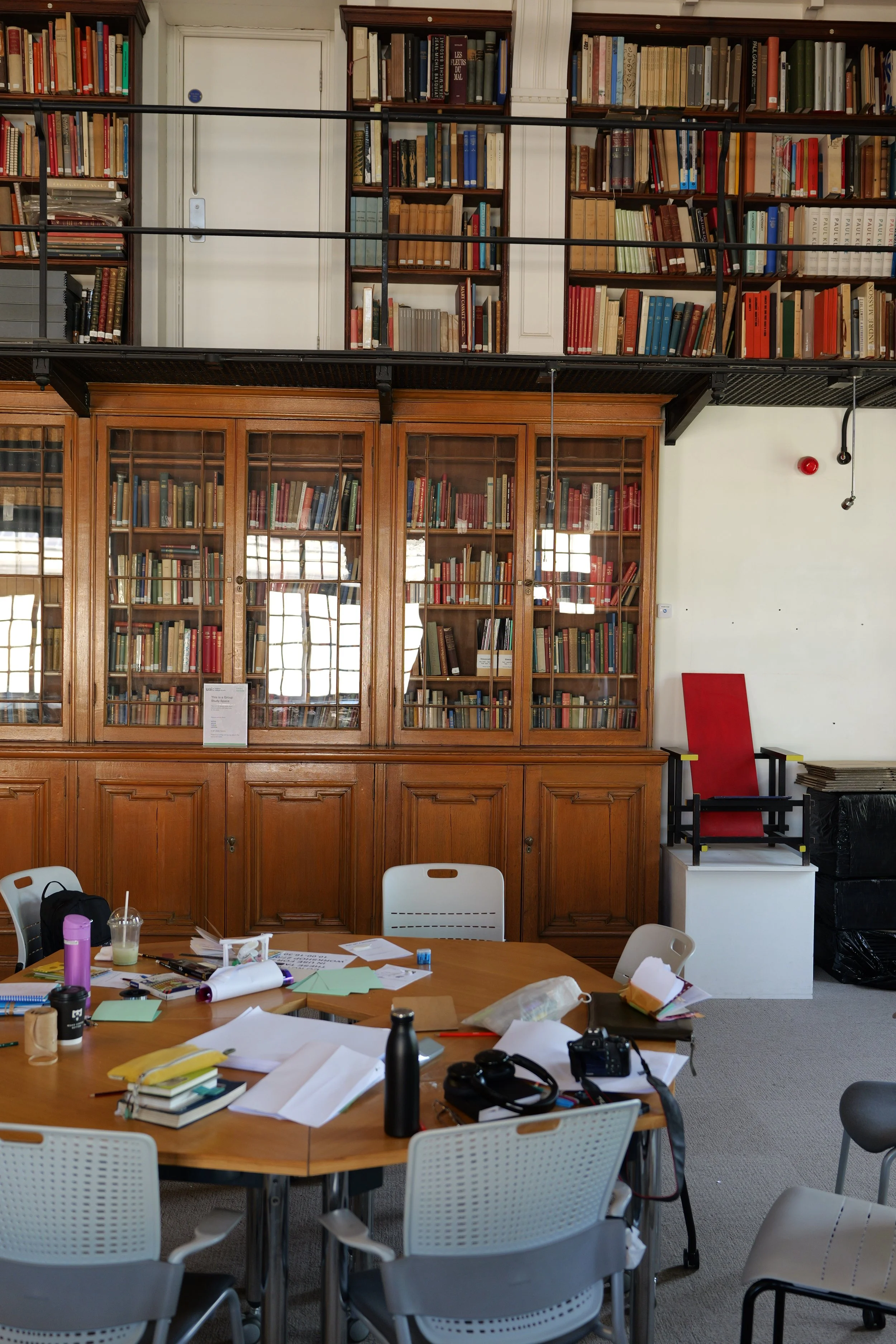
I joined the bustling library, all teak and shelves with many students clearly in finals mode. We gathered to explore and make and connect using sketchbooks as our method and methodology. it was such a darling space - some of you know i have a soft spot for this location (lots of special collections here)
As usual, i offered a combination of creativity + embodiment adventures (spacemaking) and we moved at the speed of trust (thanks adrienne) building safety and showed up BRAVE- i was impressed and a bit emo.
how we moved
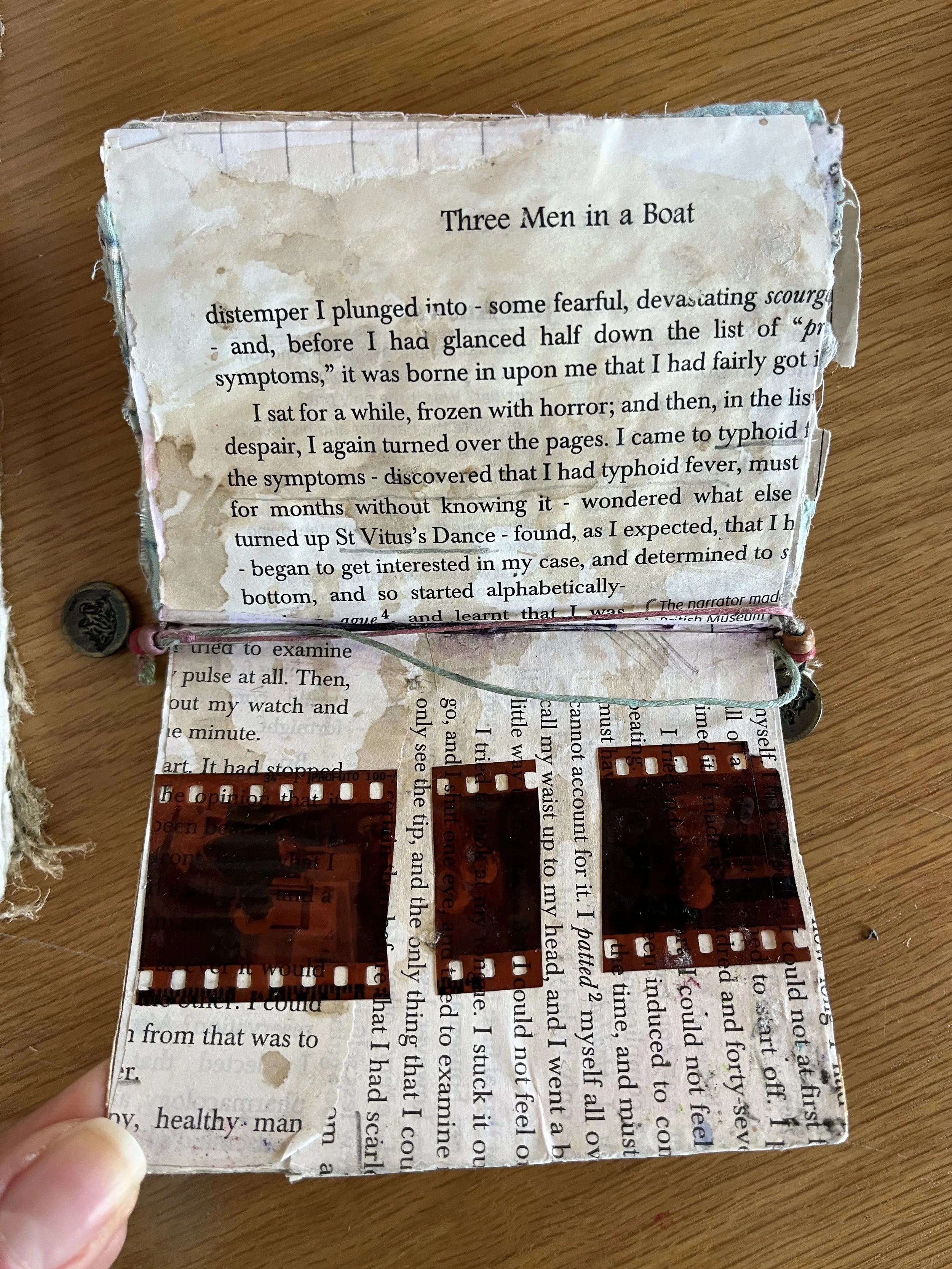
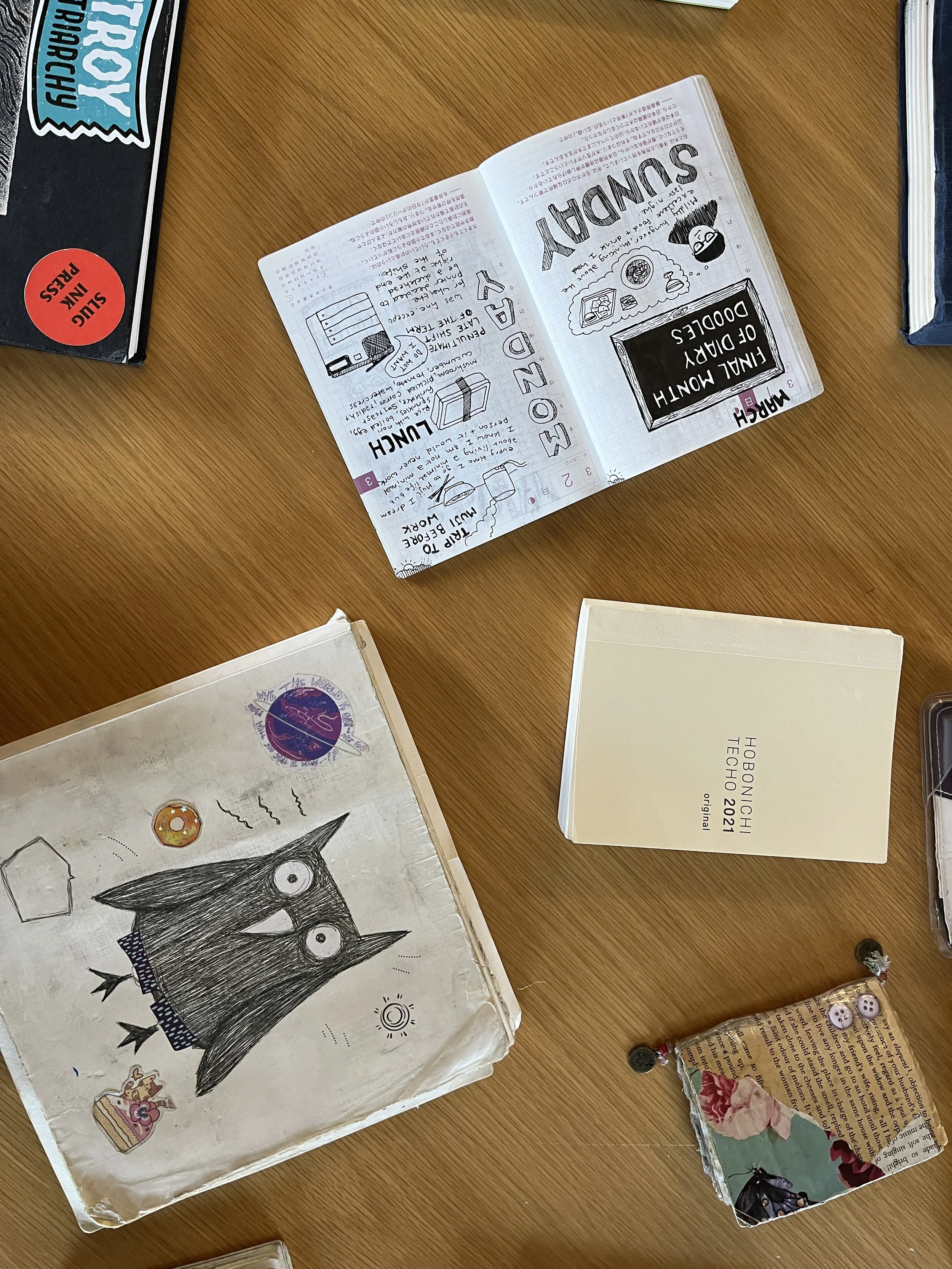
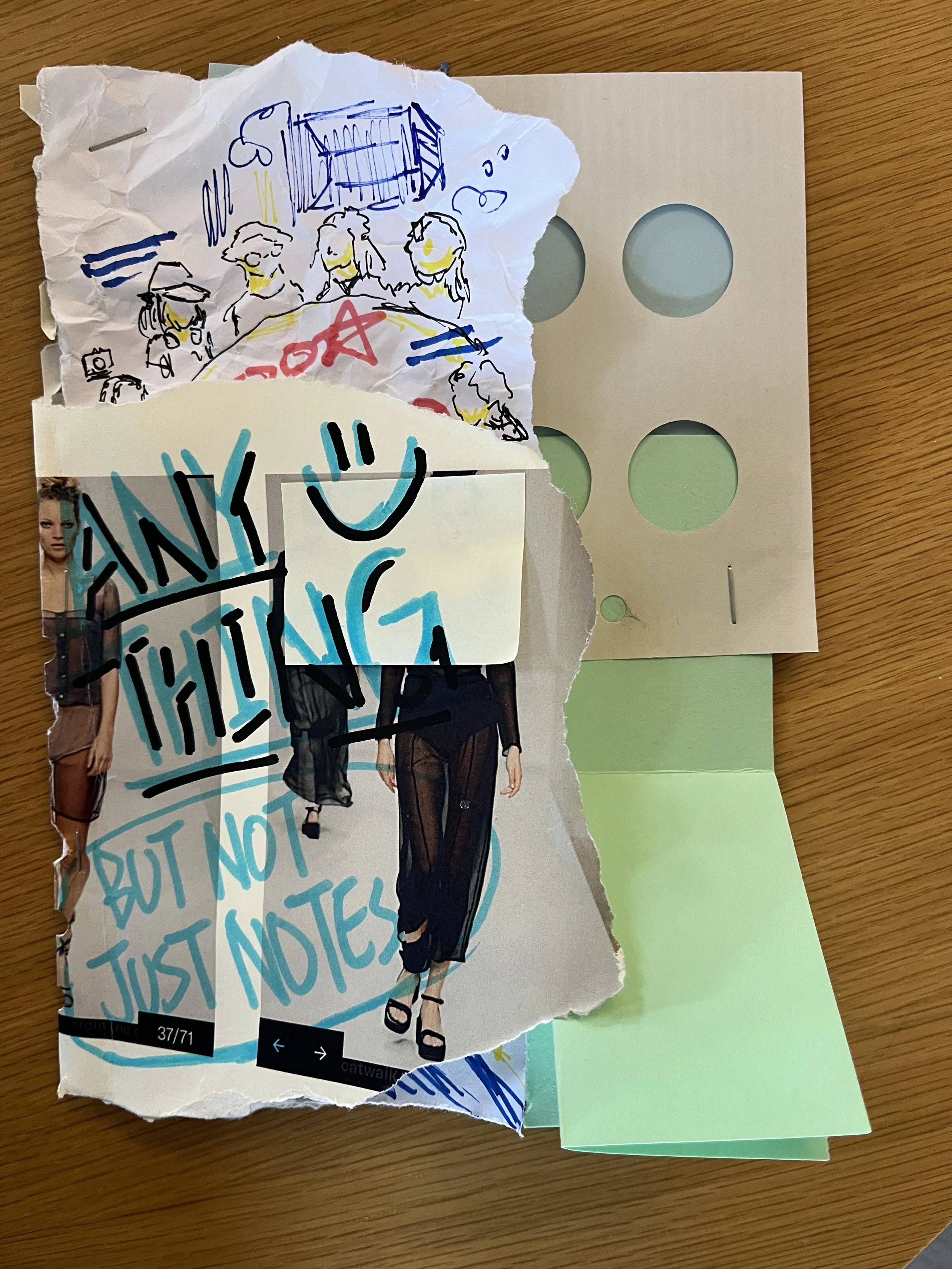
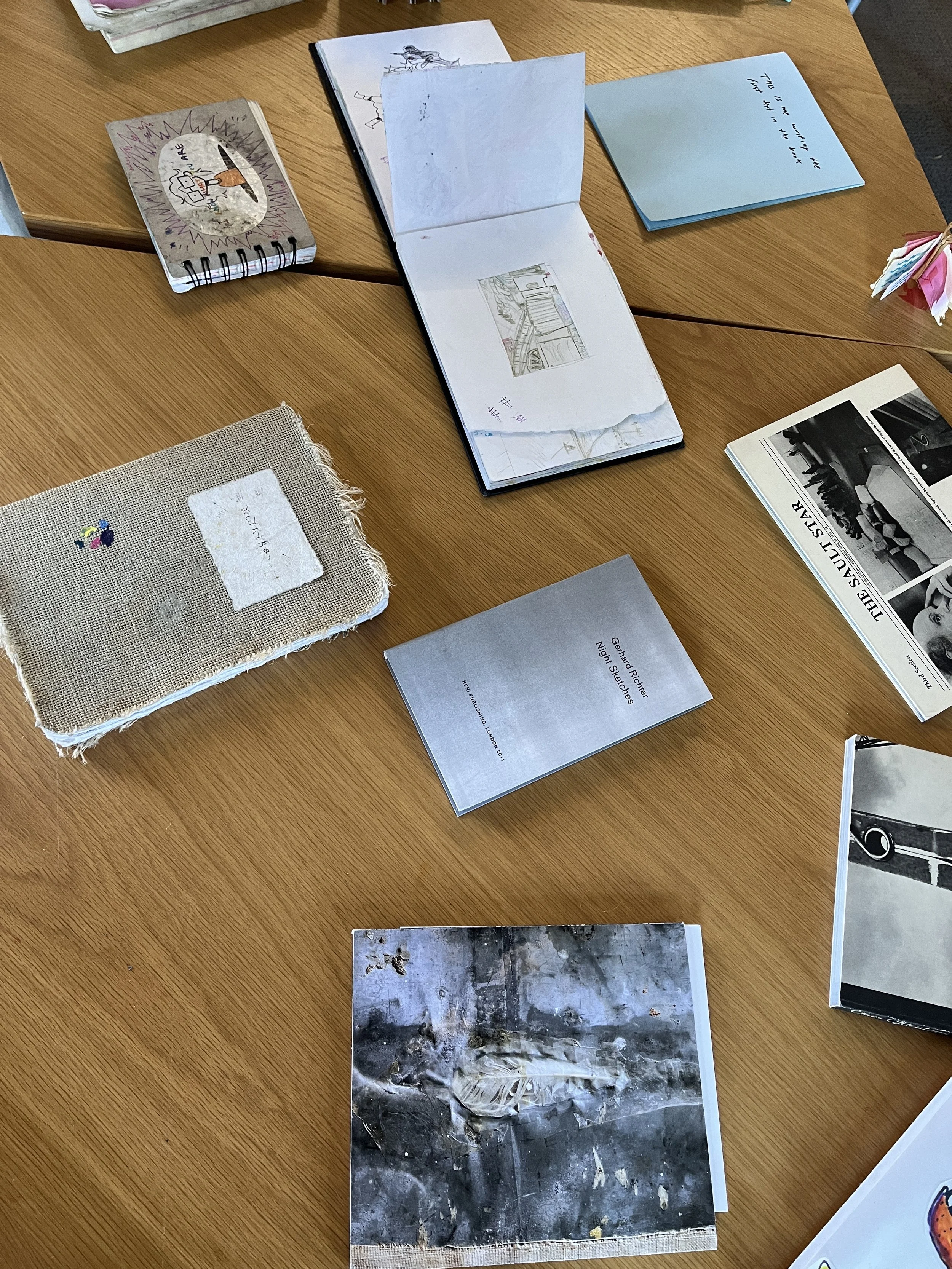
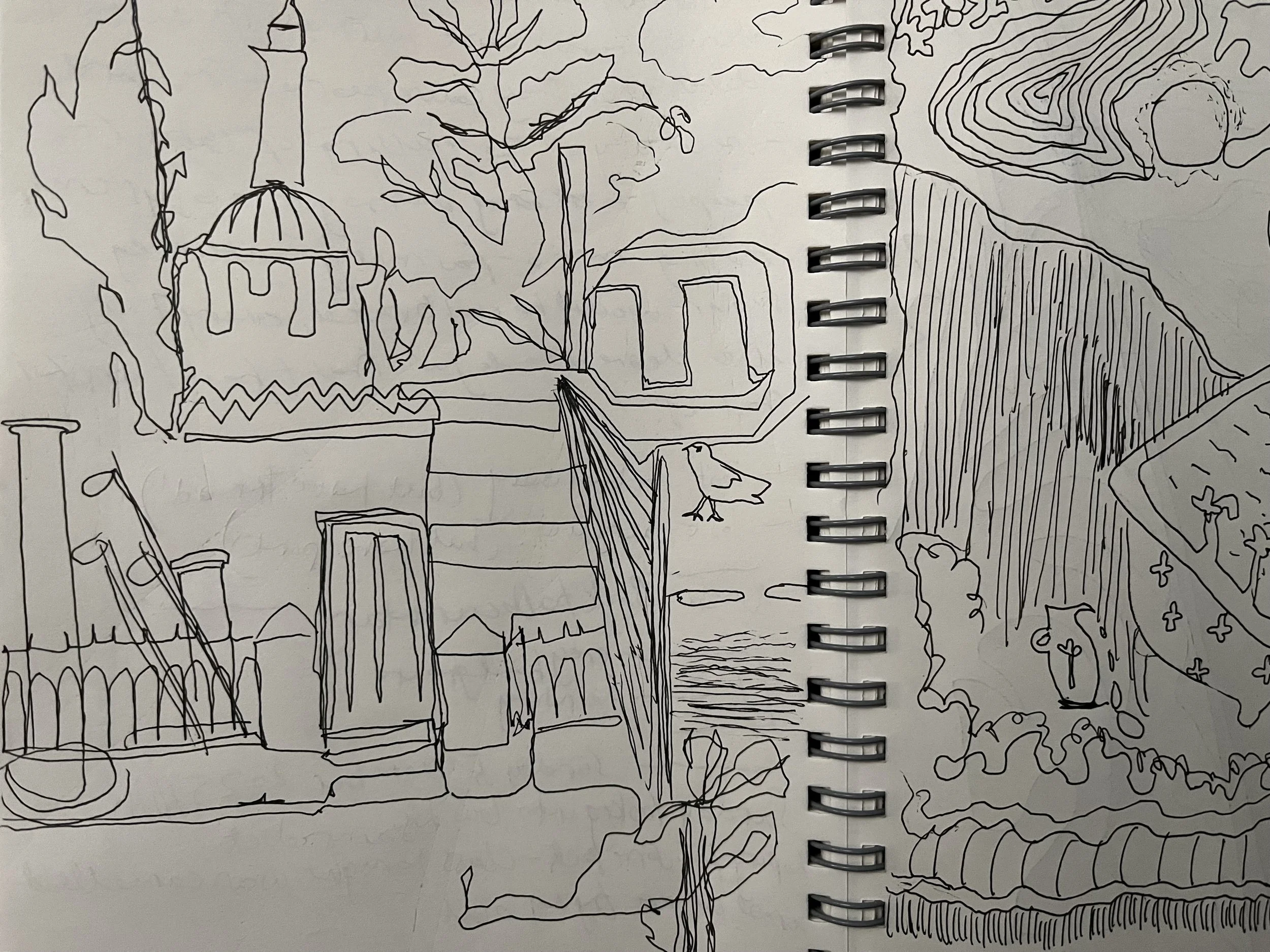
I offered prompts - both art and somatic - and we co-created sanctuaries between us, using sketchbooks plus various tools laying around (found papers and colouring pencils, pens, ourselves, and shared stories and reflections together. I was moved through the session and felt braver together in our markmaking expressions and makings. I’m always amazed at how this happens in workshop space, and it’s why i always love to come back to it. Workshops are a tangible and generative learning environment and way of thinking-listening-expressing, which speaks to my preferred way of Being.
timing and access
Considering the workshop was only 45 minutes (my choice - wanted it to be lunchtime accessible and also meet the busy period with an accessible but potent plot), you can cover a lot of meaningful ground in that time. Although i have run this workshop over 4 hours (!) in Bequia (where people said it could have still been longer!) it’s flexible and adaptable to the culture and moment.
There’s been a couple of requests for this to happen online and if you know anything about me, you’ll already know this is written into my planning. i feel it lends itself well to that as I consider access when designing all my offerings. How can people receive this? What kinds of participation are we able to welcome? How can we make tools minimal yet possible
rhythm of the space + Spacemaking energetics + poetics of relation
The rhythm and pace are something i spend time and energy with, the content yes, but that can fluctuate, move, breathe and respond to what’s there (i think all these years of holding space have meant we can expand and go deep with the tides of the group) and my prompts were a mix of a couple of planned but mostly spontaneous. i speak about this a lot when it comes to my approach to socially engaged practice, i plan and plan and plan then surrender it all as soon as i step into the space and trust. Think this is just a part of my personality to be honest, and informed by how i want to show up: effort and surrendering to presence. I want to feel free to Be in the moment, because i feel like this enables me to access a deeper way of working. I don’t want this to sound pretentious for it is really quite simple. Show up and be with what’s there. But often, life stuff gets in our way, so The Work for me is balancing enough structure (the days of planning) and entwine my rituals (kriyas, clearing, grounding - mostly energetic work but not only!) so i can show up and be open to what’s there and meet it wholeheartedly. That’s the delivery part…is this sounding pretentious, or worse, limp? I want to use a different word to wholeheartedly tbh. I want to speak of it as inviting full self, full attention, sensory portals attuned and as clear as possible.
It also means making sure there is space within the session for all of us to have room for our full selves too. Without controlling that. Make sense? Active intention at least with this because i think how you initiate the space impacts and ripples and reflects and is in relationship with everyone there. I find being really clear with that is often why i find people who join my events are vibey - we share a sensitivity for holding space for each other, and that care builds trust and generosity, which i think creates a safety and potential for brave work. I mean i think it is brave to show up as yourself and be open to others. I think it’s human
This kind of work can be tiring of course, as i realise i can’t do something at 80%. c’est impossible!
prep as The Work + bonus takeaways
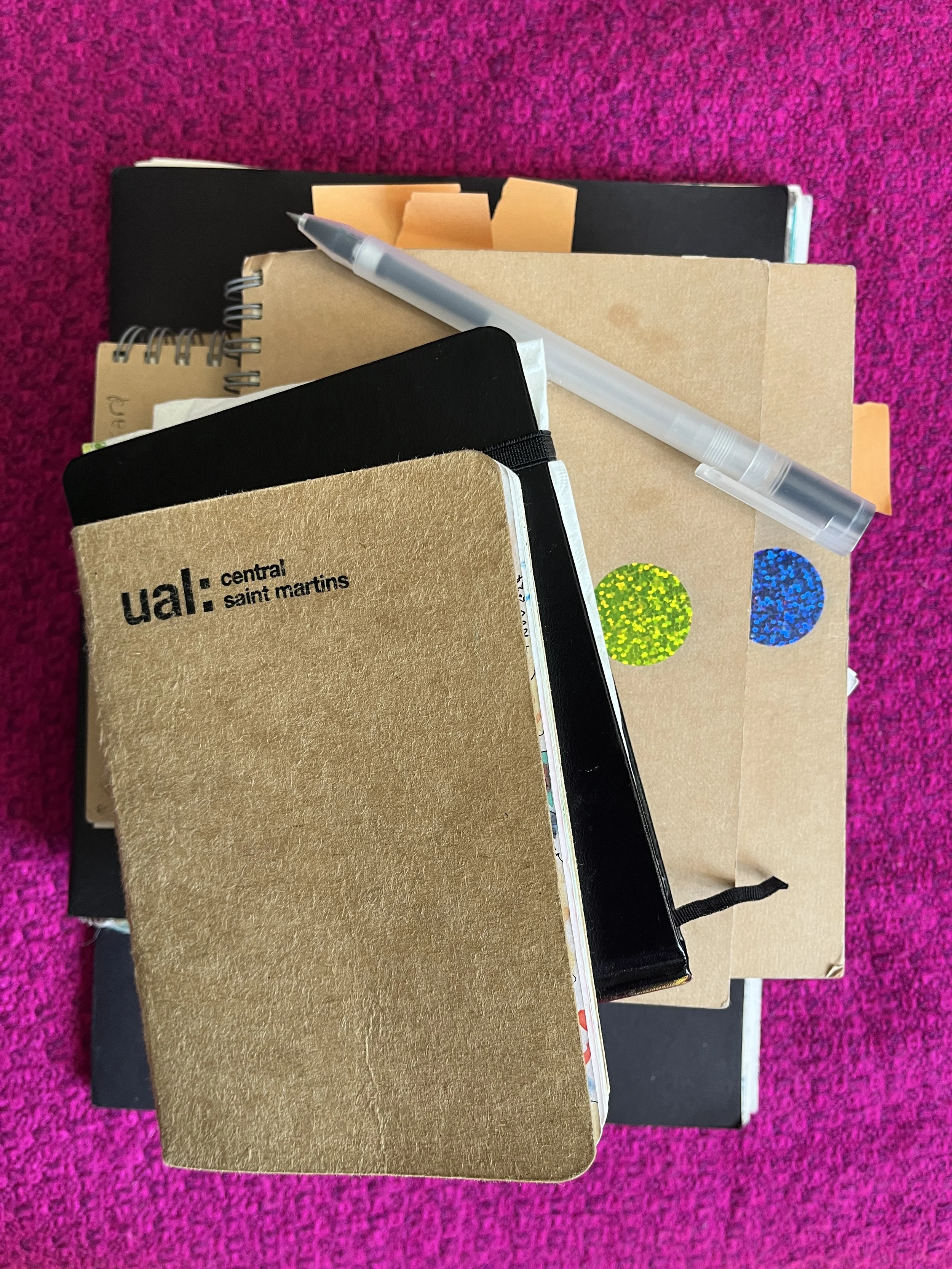
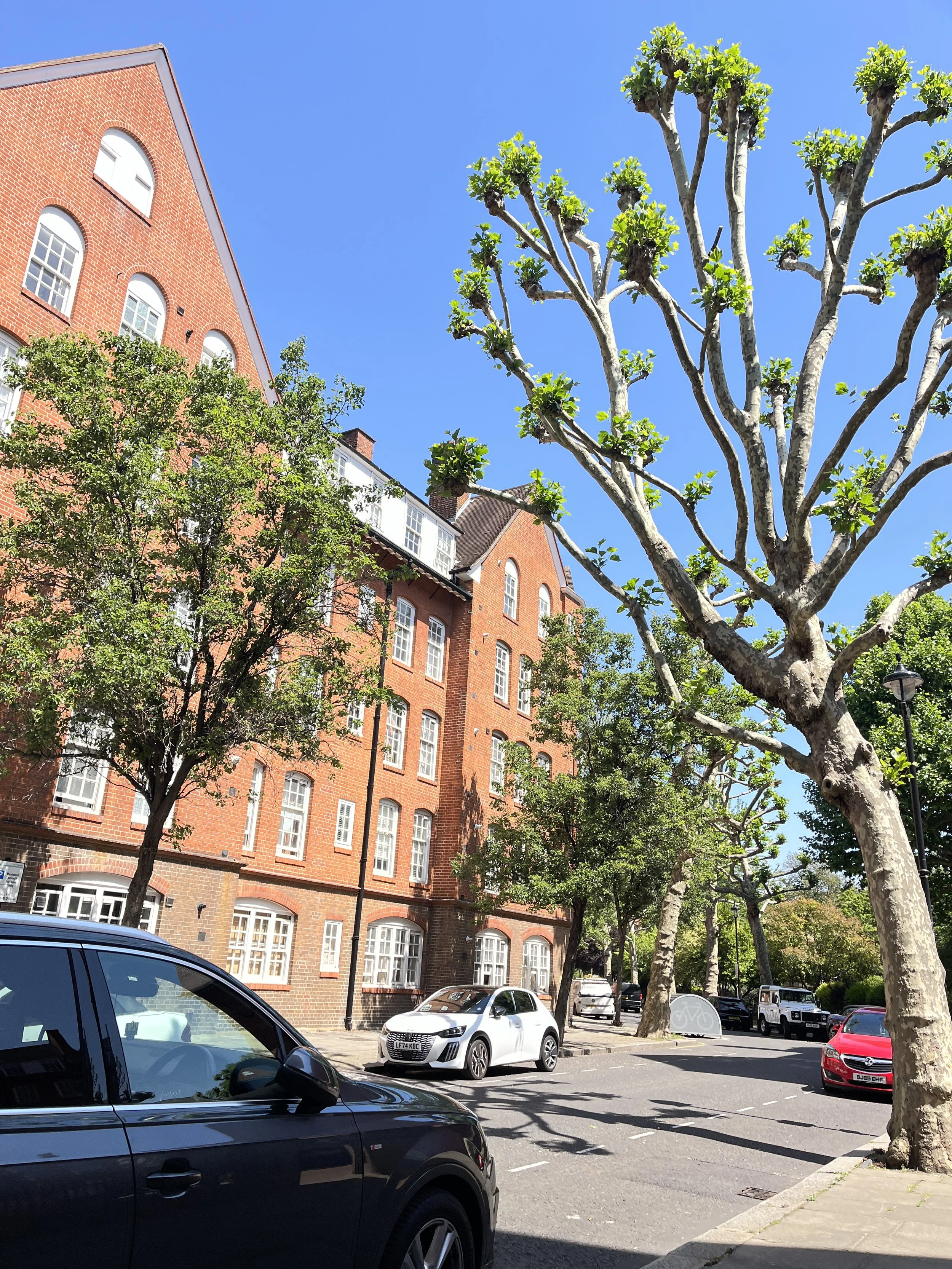
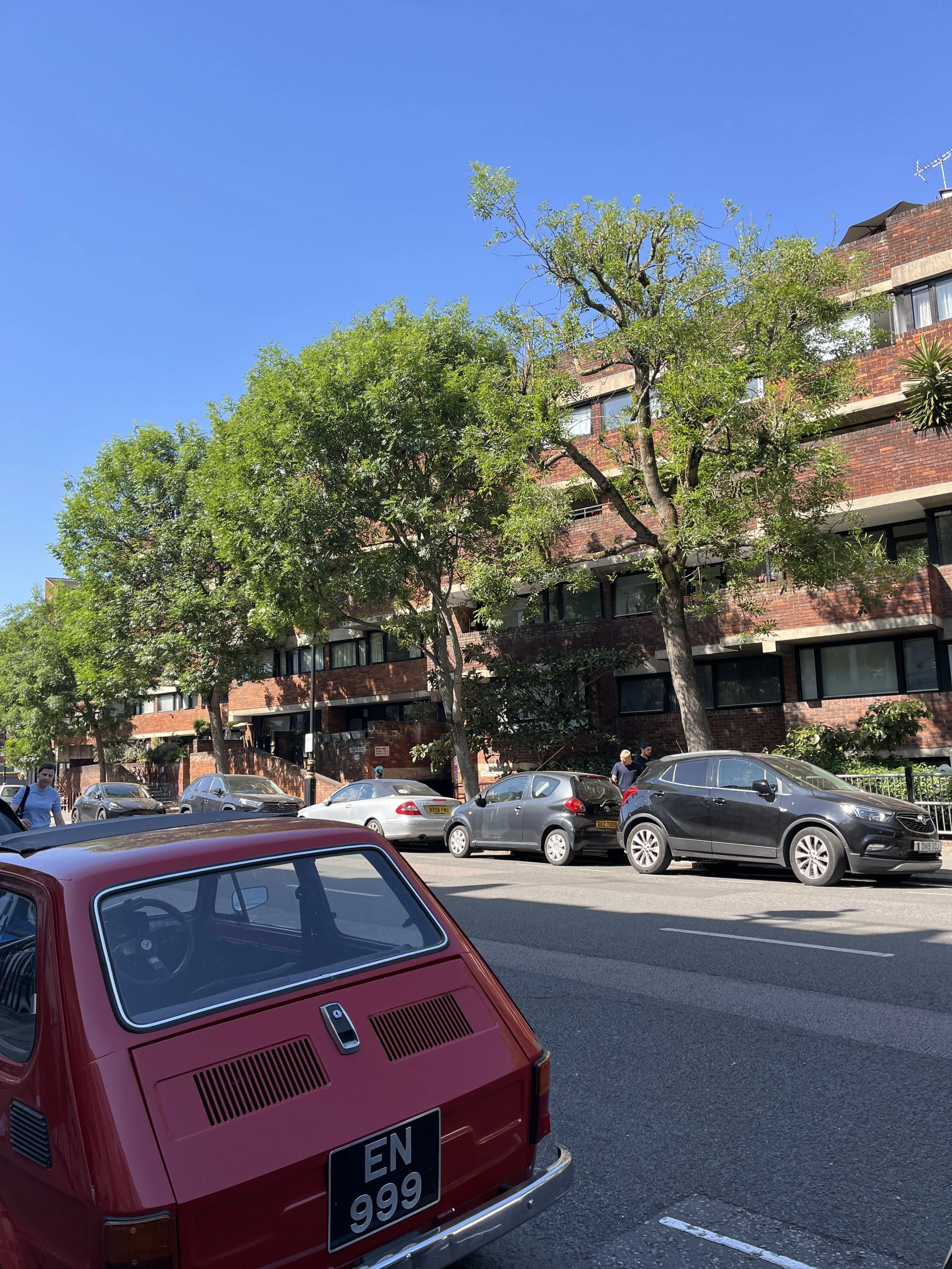
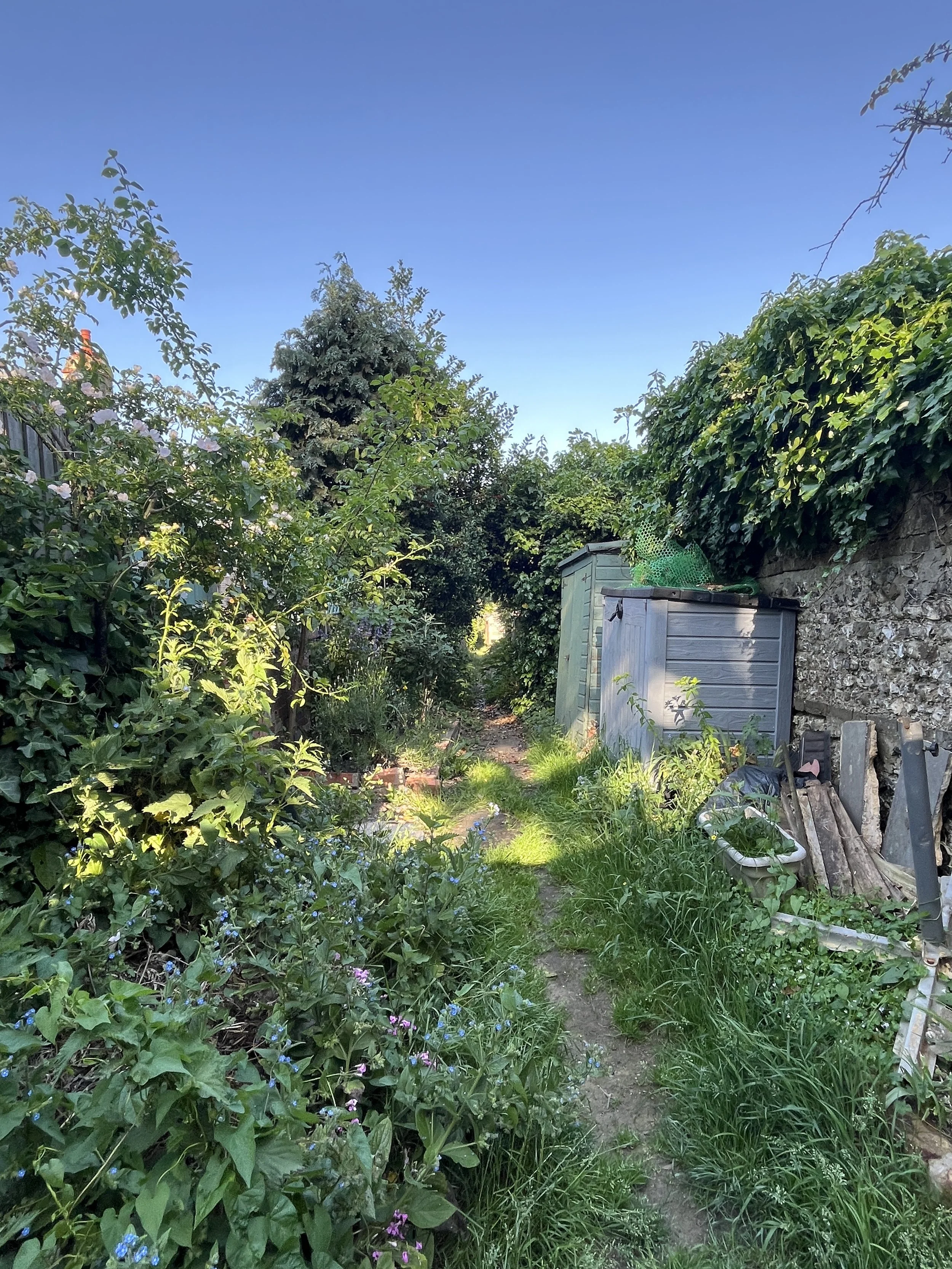
So prep is also in logistics of meticulous planning plan a-c’s with things like transport / props and so on, so i can arrive unrushed if possible, ideally with a moment to be outside somewhere for a little walk. This is why i included the images below, cause they are part of how i run things you know?
When runninng workshops or any events, safety is key for me, it’s what grounds so much - i mean, the concept for this one was very much responding to that, for academia and its harms are a contentious space, so i know i wanted to show up in a particular way and offer something counter to what is often a tense, constricted and tbh, violent space.
I was lucky that the people attending were a total vibe and really open to explorations and experiements and as ever, think this is always the key to the ‘success’ of a workshop. It’s always a sweet bonus for me when people are excited, and feel inspired to take things on into their everyday and share that. This was a goal but i never expect it.
a real gift for me is when i look over to check in and notice a settling. whether it’s a more ‘art’ focussed workshop or more somatic focussed like in a yoga class or something, it’s similar. There’s something in the way people settle with a gentle focus- you know, it’s not rigid and sharp. Considering some of the prompts i offered were very quick to turnaround, i was feeling into the collective posture, breath and energy of the gathering. There was an alert focus but as attendees generously shared with me at the end “i feel so relaxed!”. You know after a yoga class where people have enjoyed themselves and have the slightly stoned mood? A bit floaty but contentedly sitting awhile, not trying to rush back into something and instead taking the feeling with them? It’s like that. This for me is what i take as a great success. People being able to feel a little more space to Be. To also feel better than they did when they arrived.
surprises?
There’s always a surprise when daring to share your intimate space to others - i didn’t plan for this to be such a pillar in the workshop although i find some element of collaboration is something i try to incorporate into all my events. The willingness and generosity of contributions people offered was a quite something though and the reflections of what treats each person had been given continued long after i left, with ongoing perculations and growth tendrils. love to see that.
relations to + with my research + practice
it’s always helpful to have reminders of why i bother to continue doing this work. in this case, it was a no brainer that i’d travel to do this workshop, for it fits into my wider practice of archives, alt art (un)school interventions, embodied artmaking practices, safe-enough spacemaking, of sanctuary, spaces where attention can softly land, slow curiousities can emerge (and play) and people can reconnect with themselves, each-Other, and the wider worlds.
The session extended questions I have been exploring through workshops, writing, sound, and social practice: What conditions support creative participation? How might embodied forms of attention create a sense of belonging? And what becomes possible when we gather around process rather than outcome? (and outcomes being surprise glimmers and dopamine delights)
Some possible tensions
Rather than approaching the workshop as a vehicle for delivering knowledge for people to copy-paste, i was interested in creating a set of conditions through which participants could explore their own relationships to creativity, memory, and making. Although participants shared parts they were delighted by which they wanted to copy in their own practices of holding space, it’s not ever been my goal to teach a model to ‘do what i do’, rather to invite our own relationship to a thing. it’s the top down power heirarchical method of delivery i’m against, you know?
how much structure is needed before creativity becomes constrained? and conversely, how much freedom is too loose? is there such a thing?
How do we create collective experiences while honouring individual needs?
Can sanctuary exist within institutional spaces? (this question follows me everywhere! please refer to my latest other iterations of BLACCC +++